
PALLYWALLYU / CAMPUS BASIC NEEDS INNOVATION EXCHANGE
The Student-Support Program That Nearly Doubled Graduation
Why CUNY ASAP is one of higher education’s best-tested models for removing everyday barriers—and what other campuses can learn from two decades of implementation and replication.
PALLYWALLYU CASE STUDY / OCTOBER 2026
A transit card does not look like a graduation strategy. Neither does a textbook stipend or a standing appointment with an adviser. Yet when these supports are designed as one coherent system, the results can be striking.
At the City University of New York (CUNY), an ambitious program launched in 2007 offered students not just encouragement, but a workable path through college: more predictable course schedules, regular advisers, academic help, and relief from common expenses. Its original name was Accelerated Study in Associate Programs (ASAP). In fall 2026, CUNY unified the associate-degree and bachelor’s-degree pathways under the name Accelerated Study in Academic Programs—still called ASAP. [1][11]
This is the third PallyWallyU case study in our national series, following UC Irvine’s Basic Needs Center and Amarillo College’s Advocacy & Resource Center. CUNY ASAP is different: it is not a traditional CARE office or food pantry. It is a comprehensive student-success program that deliberately includes practical support for transportation, textbooks, tuition gaps, academic planning and other obstacles to persistence. The strongest evaluation evidence concerns degree completion—not reductions in food insecurity or housing instability. [1][2]
The result worth studying
40% vs. 22% | In the original random-assignment study, students offered ASAP were nearly twice as likely to earn a degree within three years as students receiving usual services. [2]
57.7% vs. 50.0% | Fourteen years later, the original randomized cohort still showed a degree-completion advantage. [4]
46% vs. 31% | After eight years, an independent randomized evaluation of ASAP-based programs at three Ohio colleges found sustained gains in degree completion. [6]
Important limit | The 2026 14-year CUNY follow-up found no statistically discernible earnings effect in New York State; the Ohio replication did show one. These are different settings and analyses. [4][6]
What makes this a basic-needs innovation?
Consider what students face between enrollment and graduation: the subway fare required to attend class, the textbook they cannot buy until payday, an unpredictable work schedule, or an aid gap that makes the semester financially impossible. ASAP does not claim that one service solves all of these problems. Instead, it packages several forms of help around the same student over time. [1][2]
| Barrier | ASAP response | Why it may matter |
| Financial friction | Tuition-and-fee gap aid, transit access, textbook assistance | Students spend less time resolving routine affordability shocks. |
| Academic friction | Small-caseload advising, tutoring, blocked scheduling, early course planning | The next course and next step become easier to find. |
| Persistence friction | Regular check-ins, career guidance, summer/winter course planning | Support is continuous, not a one-time emergency transaction. |
Table 1. The model connects recurring academic support with everyday affordability supports; the mechanism descriptions are interpretations, not separate measured causal effects. [1][2]
The design also asks something of students. Historically, the associate-degree program has required full-time enrollment and active participation in advising and other supports. That structure may promote academic momentum, but it also limits fit for some students with jobs, caregiving obligations, disability-related constraints or other reasons to enroll part time. A responsible replication must address that trade-off openly. [1][2]
The evidence: graduation, not just service activity
MDRC evaluated the original ASAP model using random assignment among almost 900 low-income students with developmental-education needs at Borough of Manhattan, Kingsborough and LaGuardia community colleges. Students in the program group could access the entire ASAP support package; the control group could receive usual college services. This design supports a causal estimate for the bundle, though it cannot isolate the impact of a transit card or advising alone. [2]
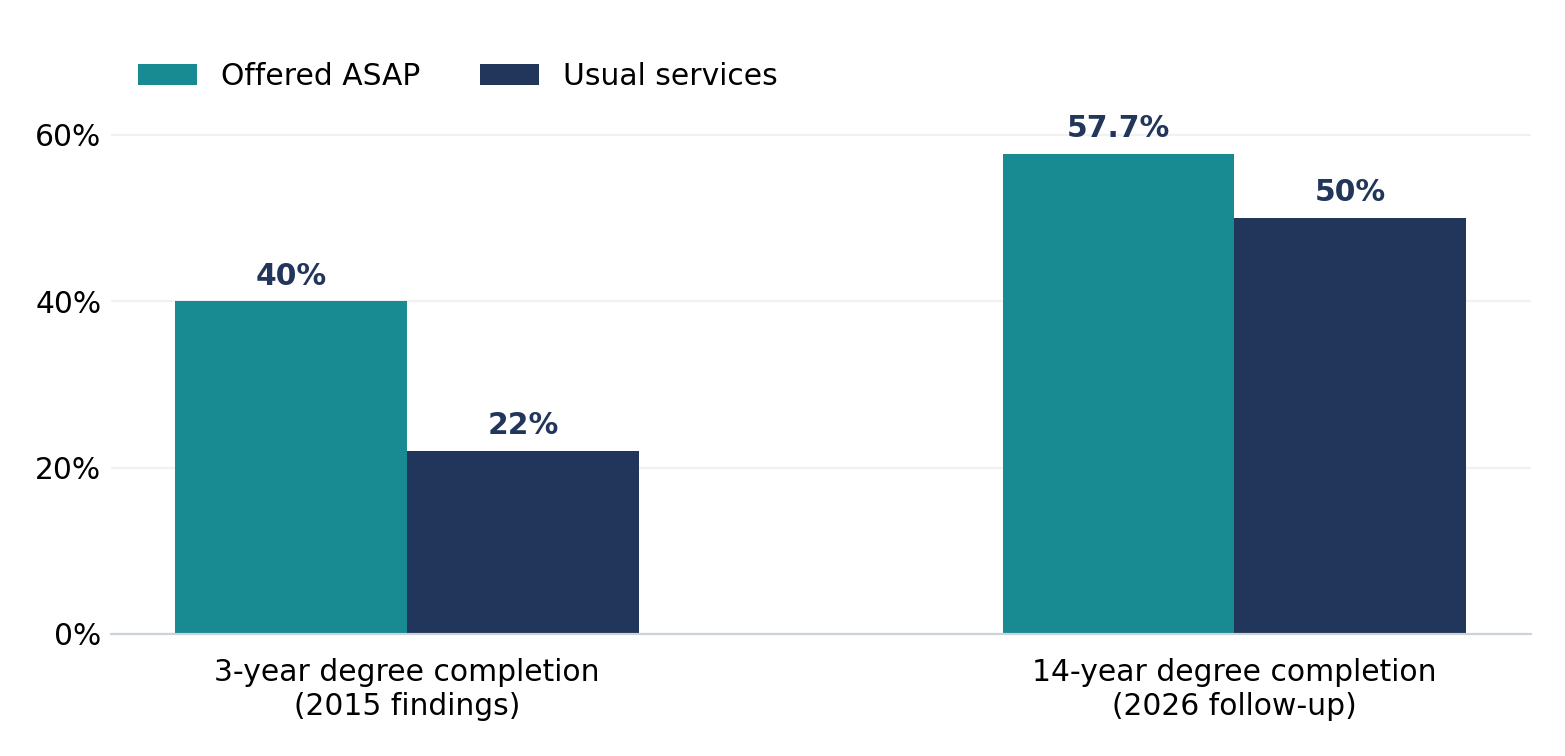
FIGURE 1 | Graduation outcomes in the original CUNY randomized evaluation. The 3-year measure is from MDRC’s 2015 report; the 14-year measure is from its August 2026 follow-up. Rates refer to students offered ASAP versus usual services. [2][4]
The three-year gap was 18 percentage points: 40% earned a degree with an ASAP offer, compared with 22% without it. Students offered ASAP also earned more credits, enrolled more consistently and were more likely to be attending a four-year college after three years. The 14-year reanalysis found 57.7% had earned a degree versus 50.0% in the control group. That later gap is smaller but remains substantial. [2][4]
The impact measure matters. The program’s effect was on a defined group of students who were eligible for the original trial. Those numbers should not be presented as the graduation rates for every CUNY student, every ASAP campus, or every type of basic-needs center. [2][4]
The most important test: could another state reproduce it?
In 2015, Cincinnati State Technical and Community College, Cuyahoga Community College, and Lorain County Community College implemented close adaptations of ASAP with CUNY and MDRC. The Ohio programs substituted locally usable gas and grocery gift cards for New York transit passes, while preserving the larger architecture of advising, financial support and a clear degree pathway. [5][6]
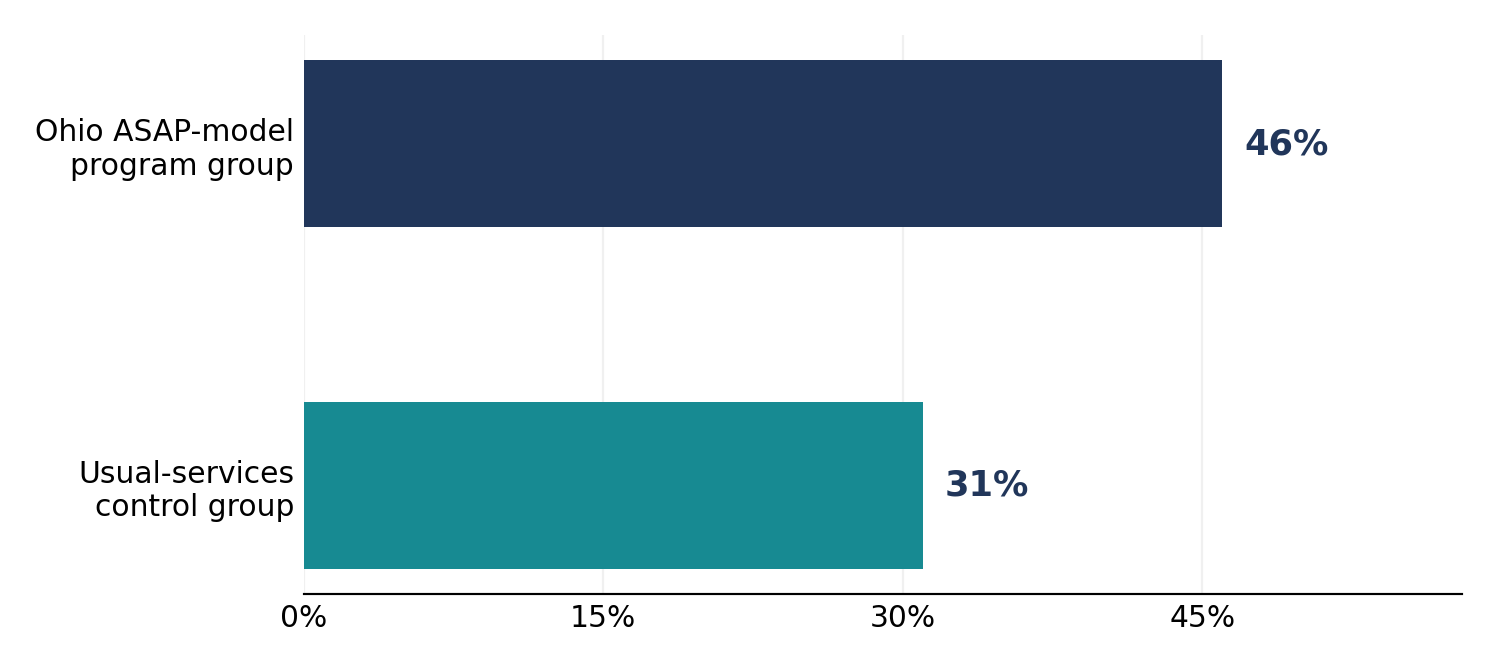
FIGURE 2 | Degree attainment eight years after assignment in the three-college Ohio ASAP replication: 46% for students offered the program versus 31% for controls. Randomized evaluation. [6]
That is a 15-percentage-point advantage eight years later. The Ohio study also provides evidence of benefits beyond enrollment: average annual earnings in the eighth follow-up year were higher for the students offered the program. [6]
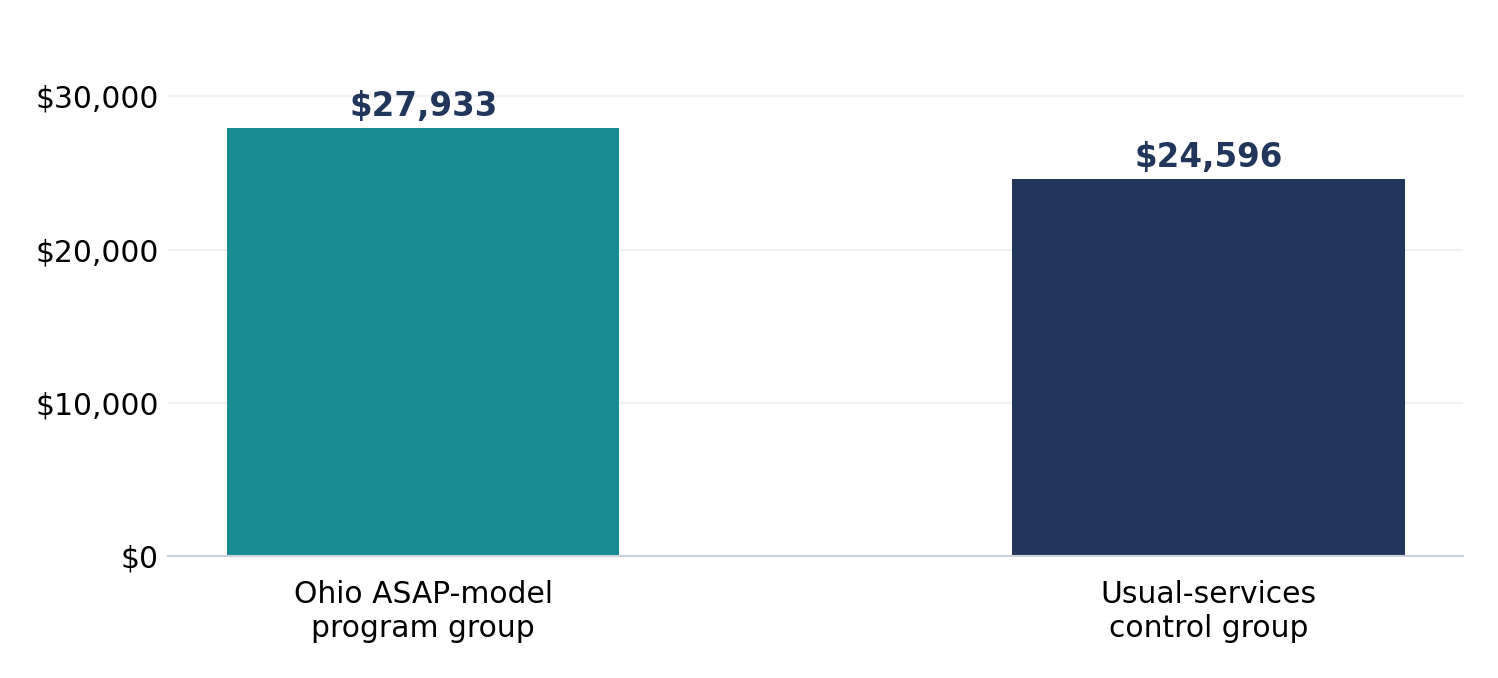
FIGURE 3 | Year-eight annual earnings in the Ohio randomized evaluation. The program-group figure is calculated from the reported $24,596 control average plus the reported $3,337 impact; amounts are not inflation-adjusted here. [6]
The reported $3,337 gap amounts to roughly 14%. It is not a guarantee that any replication will produce a wage gain. Indeed, MDRC’s August 2026 follow-up of the original CUNY participants did not find a statistically discernible annual-earnings impact within New York State. The two findings should be shown side by side, not blended into a single national employment claim. [4][6]
A model expanding from associate degrees to bachelor’s degrees
The original program focused on associate-degree completion. CUNY later developed ACE—Accelerate, Complete, Engage—for bachelor’s-degree students; that pathway was folded into the newly unified ASAP name in fall 2026. A separate randomized evaluation at John Jay College found a five-year bachelor’s-degree graduation rate of 68.8% for students offered the former ACE model versus 57.1% among controls. This is encouraging evidence for a related adaptation, not a result from the original associate-degree trial. [11]
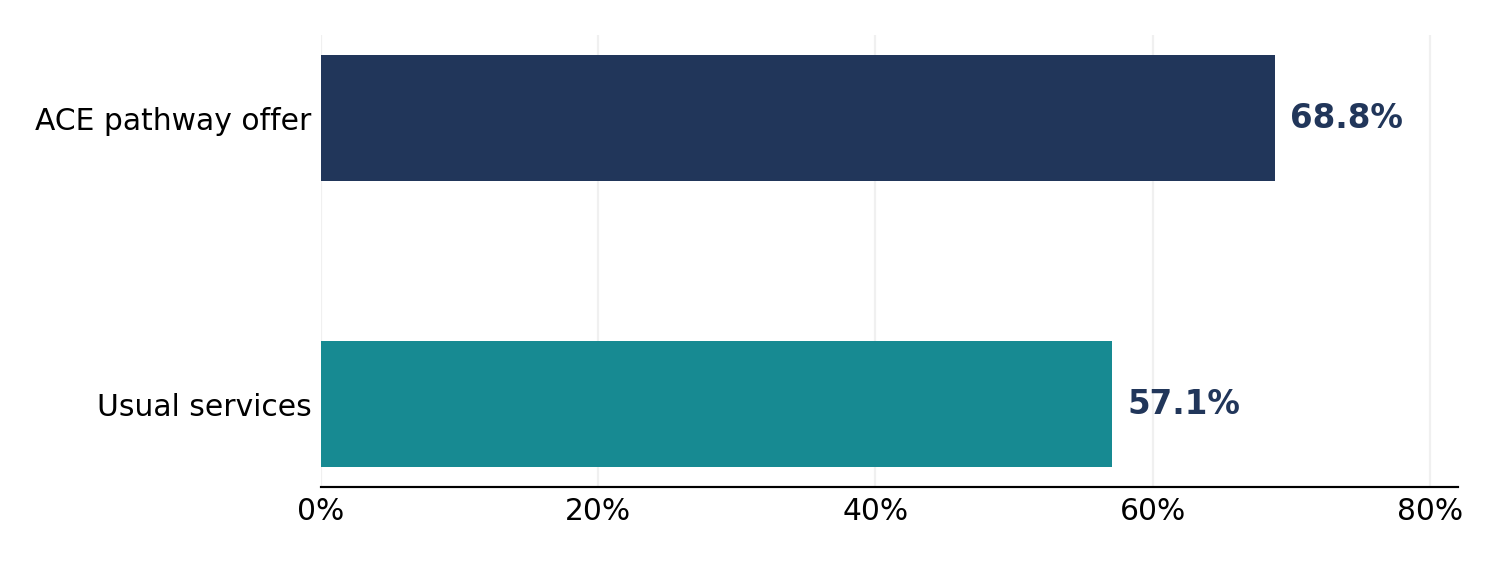
FIGURE 4 | Five-year bachelor’s-degree completion in the John Jay College ACE randomized evaluation. The ACE pathway became the bachelor’s-degree branch of CUNY ASAP in fall 2026. [11]
A second kind of replication appeared at SUNY Westchester Community College: its Viking ROADS adaptation increased three-year degree attainment by approximately 12 percentage points in a randomized evaluation conducted largely during the pandemic. This is further evidence that campuses can preserve the program’s core while adapting operational details. [7]
Why the package works better than a campus referral list
The practical insight is not that every university needs to buy MetroCards. It is that routine educational and financial barriers reinforce each other. A student with a good advisor but no way to reach campus still struggles; a student with free transit but no workable course sequence can still lose momentum. Coordinated supports reduce the number of independent steps students must navigate to stay enrolled. That is a plausible operating mechanism, not a causal breakdown of which ingredient created which share of the graduation gain. [1][2]
The model therefore contrasts with an emergency-only approach. A food pantry can be indispensable, but ASAP builds a regular relationship with a dedicated advisor and coordinates support across semesters. For basic-needs and CARE programs, that distinction suggests a powerful partnership: keep specialized crisis response in place, while giving students a stable academic and financial support pathway before those crises interrupt learning. [1][2]
The hard question: can campuses afford it?
ASAP costs more per student than business-as-usual support. CUNY’s June 2026 factsheet puts the annual incremental cost at approximately $3,440 per ASAP student above ordinary full-time-equivalent instructional allocations. That figure is CUNY-specific and should not be used as a universal campus price tag. [10]
The correct economic question is not “Is intensive support free?” but “What does the institution spend per additional completer?” MDRC found lower cost per graduate after three years in the original randomized evaluation because the increase in graduates offset higher program spending. Other estimates and benefit-cost models depend on assumptions about costs, completion, future earnings and public returns; local evaluation is still necessary. [2][10]
How others are following the model
CUNY created a National Replication Collaborative to help institutions adopt the model with fidelity while adjusting it to local geography, transportation, funding and students’ needs. Documented partner efforts include the early Ohio replication, Mission College in California, Colorado COSI ASAP, North Carolina Community College Boost, and multi-college programs in Maryland. Not every newer partner has published long-term results yet. [8][9]
CUNY’s 2026–27 Student Success Action Lab also brings state teams together to plan wider implementation. That makes ASAP more than a promising isolated pilot: it is a program with a defined playbook, a national technical-assistance network, repeated research and explicit attention to scaling. [12]
The 120-day playbook for another college
Days 1–30 | Map friction and choose a cohort.
Bring together advising, financial aid, CARE/basic needs, institutional research, student government and enrollment services. Quantify how often transportation, textbook costs, tuition gaps and scheduling disrupt progress. Identify an eligible cohort and document whose needs a full-time requirement may exclude.
Days 31–60 | Design the whole support bundle.
Assign accountable advisers, simplify access to textbook and transportation help, align degree maps and course schedules, and give students one clear front door. Do not treat a resource directory as a substitute for staffed navigation.
Days 61–90 | Fund capacity and build the data system.
Calculate annual cost per participant, incremental staffing and aid budgets, expected scale, and realistic referral capacity. Arrange privacy-safe reporting on take-up, student experience, credits, retention and completion.
Days 91–120 | Launch and test.
Start with a manageable cohort, implement routine check-ins, log problems students still cannot resolve, and plan a credible comparison strategy before promising an impact. Where appropriate, consult the CUNY National Replication Collaborative.
For any CARE-center partnership, add a second dashboard beside academic metrics: referrals successfully completed, wait times, emergency-aid resolution, pantry access, housing navigation and student-reported barriers. These are recommended local measures; they were not all outcome measures in MDRC’s ASAP studies. [2][9]
What cannot be claimed from this evidence
ASAP has some of the strongest causal evidence available for college completion, but the published results should not be misrepresented as proof that the program reduced food insecurity, prevented homelessness, or improved mental health. The experimental estimates measure the combined package, not the isolated benefit of any single service. Replications that change eligibility, staffing or support intensity may not reproduce the same effects. [2][4][6]
The lesson for campus leaders is more useful than a slogan: invest in a coordinated, persistent system of support; adapt the supports to local barriers; and measure outcomes that matter to students, not merely the number of interactions logged. The key to ASAP’s national influence is that other institutions can study both what CUNY built and what rigorous evaluations show it achieved.
Sources and research notes
All publications used to develop the factual claims and charts in this article are listed below. Numbered citations in the article and chart captions correspond to these entries. Source URLs are shown in full for Word-to-Divi copying. Pages are current to October 19, 2026; program details and partner counts may change.
[1] City University of New York. About CUNY ASAP: current model, 2007 history, benefits, scale and 2026 unified naming. View source
Full URL: https://www.cuny.edu/about/administration/offices/student-success-initiatives/asap/about/
[2] MDRC — Scrivener et al. (February 2015). Doubling Graduation Rates: Three-Year Effects of CUNY ASAP for Developmental Education Students (original randomized trial). View source
Full URL: https://www.mdrc.org/work/publications/doubling-graduation-rates
[3] MDRC (October 2017). The Power of Fully Supporting Community College Students (six-year original study follow-up). View source
Full URL: https://www.mdrc.org/work/publications/power-fully-supporting-community-college-students
[4] MDRC — Weiss et al. (August 2026). The 14-Year Effects of CUNY ASAP on Educational and Labor Market Outcomes (degree completion and New York labor-market results). View source
[5] MDRC — Miller et al. (January 2020). Increasing Community College Graduation Rates with a Proven Model: Three-Year ASAP Ohio Demonstration results. View source
Full URL: https://www.mdrc.org/work/publications/increasing-community-college-graduation-rates-proven-model
[6] MDRC — Hill, Warner & Sommo (April 2025). From Learning to Earning: Eight-Year Findings from the ASAP Ohio Demonstration (completion and earnings). View source
Full URL: https://www.mdrc.org/work/publications/learning-earning
[7] MDRC — Dai, Warner & Sommo (March 2025). Charting Pathways: Three-Year Findings from the Viking ROADS Demonstration (SUNY Westchester). View source
Full URL: https://www.mdrc.org/work/publications/charting-pathways
[8] City University of New York. ASAP National Replication Collaborative: Partner Profiles and local adaptations. View source
[9] City University of New York. ASAP National Replication Collaborative: How Replication Works. View source
[10] City University of New York (June 2026). CUNY ASAP / ACE Fast Facts: program costs, scale and contemporary outcomes (PDF). View source
[11] City University of New York. CUNY ASAP Evaluation: methods, independent findings, John Jay College ACE randomized trial, name change. View source
Full URL: https://www.cuny.edu/about/administration/offices/student-success-initiatives/asap/evaluation/
[12] City University of New York. Scaling the ASAP Evidence-Based Student Success Model: Student Success Action Lab 2026–27. View source
Editorial disclosure
This PallyWallyU case study draws on original research published by MDRC and current CUNY program documentation. It is independent editorial analysis; neither CUNY nor MDRC has been represented as endorsing PallyWallyU. The 120-day plan and suggested CARE-center metrics are original recommendations, not measured findings from the ASAP studies.