
PALLYWALLYU / CAMPUS BASIC NEEDS INNOVATION EXCHANGE
The College That Made Basic Needs Everyone’s Job
How Amarillo College’s Advocacy & Resource Center turned a “culture of caring” into a practical campus system and what its experimental evidence can teach every institution.
PALLYWALLYU CASE STUDY · OCTOBER 2026
What if food insecurity, transportation problems, a sick child or a lost job were treated as obstacles to college completion—not as problems students had to solve before asking for academic help?
That question reshaped Amarillo College in the Texas Panhandle. Starting with its No Excuses Poverty Initiative and later building the Advocacy & Resource Center (ARC), the college connected food and emergency assistance, benefits navigation, childcare and transportation with advising, tutoring and college-wide responsibility for student success. Its approach became nationally influential and earned recognition as a co-winner of the 2023 Aspen Prize for Community College Excellence.
What makes Amarillo especially valuable as a case study is the unusually strong evidence on one practical question: can a college get more students through the door of an existing support center? In a randomized study, it did. The harder question—whether the entire model independently increases graduation—still needs more evidence. That distinction makes the lessons more useful, not less.
At a glance: what the evidence establishes
56% versus 22%. During 2018–19, targeted students receiving personalized outreach visited the ARC at least once at much higher rates than students who received no extra outreach. Randomized comparison; 1,968 study participants. [1]
71% versus 59%. Among the developmental-education subgroup, students receiving outreach passed developmental coursework more often than the control group during the study year.
26% to 45%. Amarillo’s three-year completion rate for first-time-in-college students rose between 2012 and 2017. This is an institutional trend, NOT a causal estimate of ARC impact.
2023 Aspen Prize co-winner. The independent award considered completion, transfer, workforce outcomes and equity—not merely the presence of a food pantry.
First, the college learned what students were carrying
The starting point was not a pantry. Amarillo leaders analyzed who was attending their college, listened to students, and learned how poverty—housing costs, hunger, unreliable transportation, child care and legal problems—could interrupt attendance and coursework. The 2018 case study documents how that knowledge led to organization-wide staff learning, community partnerships, an emergency-assistance strategy and coordinated services.
In a fall 2017 basic-needs survey described in the later evaluation, 54% of respondents experienced food insecurity, 59% experienced housing insecurity and 6% experienced homelessness. These are overlapping categories; they should not be added together or treated as a nationally representative student sample.
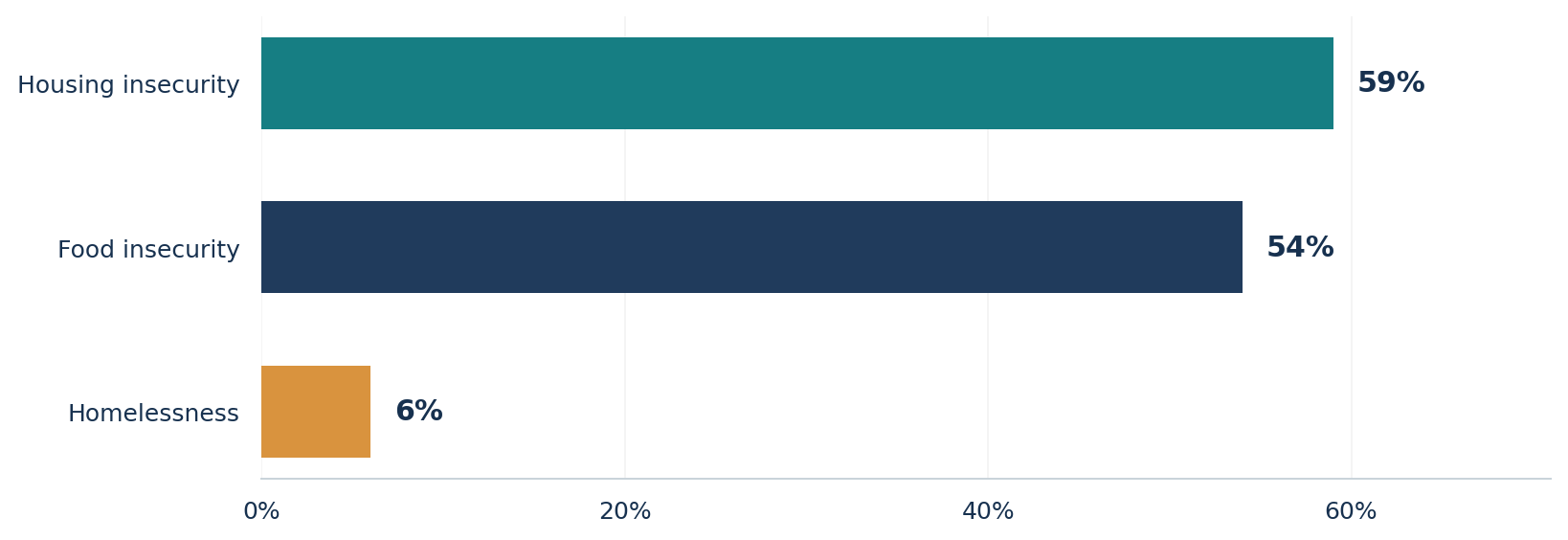
FIGURE 1 | Student-reported need at Amarillo College, fall 2017. Categories overlap. Source: Hope Center evaluation, p. 12.
The lesson for other colleges is to measure need across several domains before choosing a service model. A student can simultaneously need groceries, help with rent and a reliable ride to class. Treating each problem as a separate referral can leave the student doing the coordination work.
What Amarillo actually built
The ARC became a single, visible point of contact, staffed to help students navigate services rather than simply hand them a list. The 2021 evaluation describes case management, emergency aid, assistance with public benefits, transportation, child care, textbook lending, career guidance, counseling, a food pantry and a clothing closet; some services were coordinated through other campus offices and local organizations.
The program did not remain a static blueprint. Amarillo’s current ARC page lists Social Services, the Adult Students Program, the Food Pantry and a Storybridge Library location. Its current pages also describe help with childcare costs, commuting expenses, textbook loans and additional campus pantry locations. Available assistance is subject to eligibility and funding; institutions should re-check actual service availability before adopting or citing operational details.
The transferable design is five connected decisions
A front door. Offer a clear place—and an online path—where students can explain what is wrong without first diagnosing which office owns the problem.
A human navigator. Use trained staff to triage needs, connect multiple supports and follow through when a referral fails.
Community partnerships. Connect food, housing, public benefits, legal assistance and family services with local providers rather than expecting one college to become every provider.
Faculty and staff ownership. Make referrals normal in advising, classrooms and campus communications; remove the expectation that students must somehow know where to start.
Academic integration. Pair basic-needs help with tutoring, shorter course pathways and developmental-education reform. These are complementary reforms, not interchangeable interventions.
The most compelling experiment: making help visible
During the 2018–19 academic year, researchers randomly assigned 1,000 selected students to receive personalized outreach emails and 968 to a comparison group. Both groups could use ARC services; nobody was denied support. The emails, sent approximately monthly from September through March, described available help and encouraged students to visit. Researchers followed administrative records rather than relying only on self-reported intent.
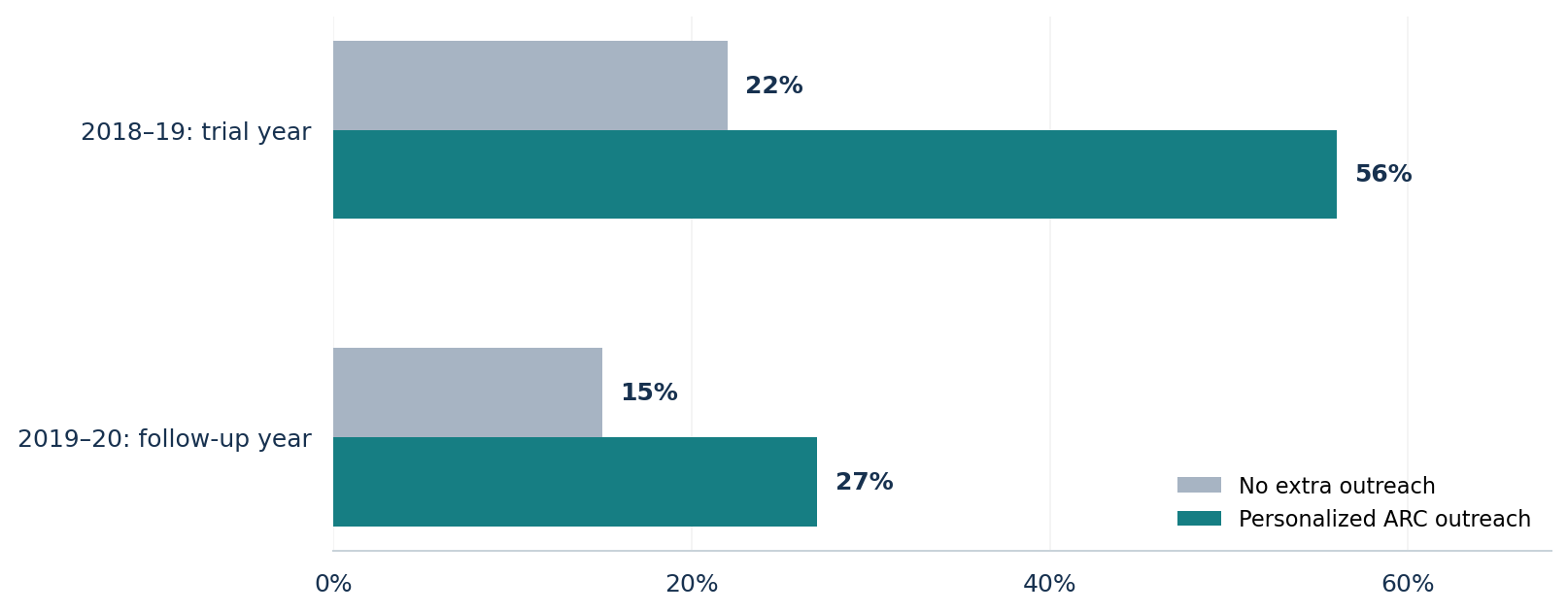
FIGURE 2 | Share of study participants with at least one ARC visit. Randomized outreach vs. no extra outreach; 2018–19 and 2019–20. N = 1,968. Source: Hope Center, Figure 3.
In the first year, 56% of the outreach group visited the ARC at least once, compared with 22% of the comparison group—a 34-percentage-point difference. Even in the following academic year, the outreach group had more recorded visitors: 27% versus 15%. These are program-use outcomes, not evidence that all recipients obtained food, housing or financial security.
Why it matters: colleges can invest in services and still fail to reach eligible students. Targeted, human-sounding invitations attached to known campus resources can reduce the information barrier. The ARC already conducted other outreach, so the study tests an added encouragement strategy in a college with a strong support culture—not whether generic email reminders work everywhere.
Academic impact: promising and bounded
The same experiment measured developmental coursework, grades, credits, persistence and graduation. In the first study year, developmental-education students receiving the outreach passed their developmental courses at a rate of 71%, versus 59% among comparable non-nudged students. That is a 12-percentage-point difference, or about a 20% relative increase from the comparison-group rate.
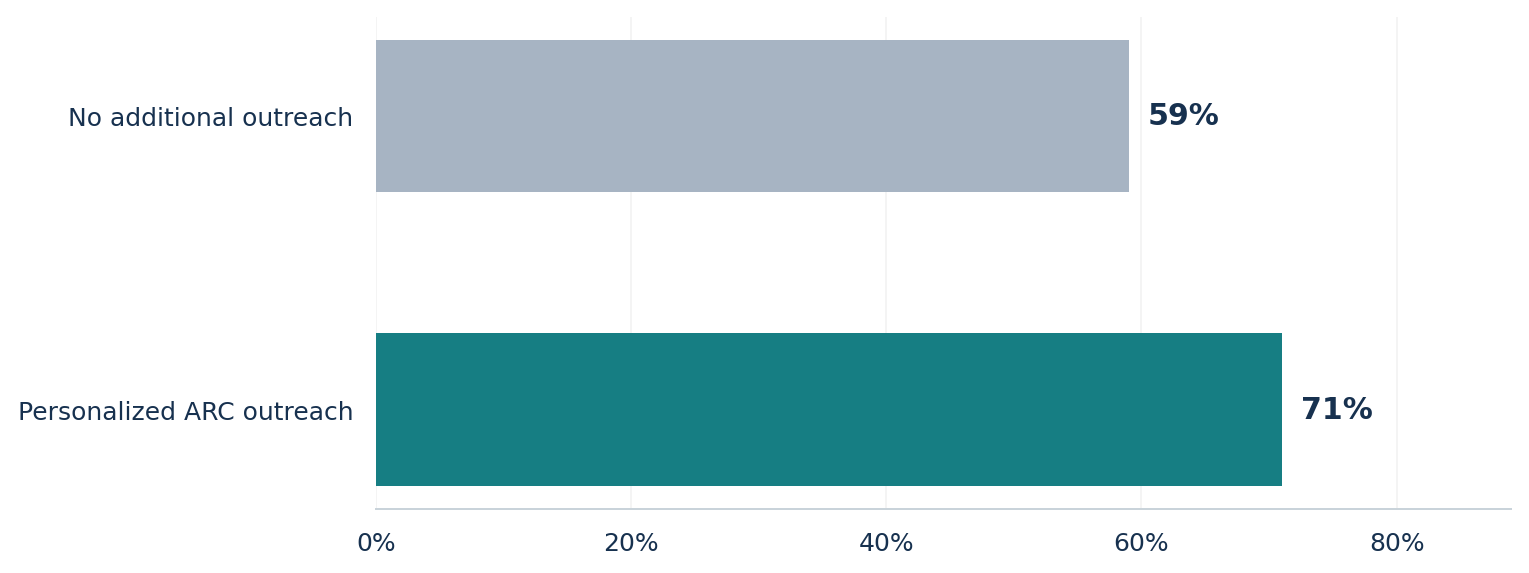
FIGURE 3 | Developmental-education course passage in 2018–19, by randomized outreach assignment. The study reports an improvement for this subgroup; it is not a general college-wide pass rate. Source: Hope Center, Figure 5.
The researchers did NOT find clear improvements in credits earned, grade-point average, course passing overall or long-term retention, transfer and graduation attributable to these outreach emails. Students may have benefited in other ways, but the trial does not prove those additional outcomes. This nuance should guide any campus that plans to advertise an ARC-like program as a guaranteed retention solution.
What can be claimed—and what cannot
Strongest experimental claim. Added personalized outreach increased ARC use among the selected students, and improved developmental-course passage in a subgroup.
Supported but descriptive claim. The college improved institution-wide completion during a period of multiple academic and social-support reforms. The ARC alone cannot be assigned all the credit.
Still an open question. How much additional retention, financial stability and degree completion would be caused by scaling the entire package at other types of institutions? New sites should evaluate that locally.
A college-wide success trend worth studying—not overselling
The 2018 implementation case study reports that Amarillo’s three-year completion rate for first-time-in-college students rose from 26% in 2012 to 45% in 2017. Later, the Aspen Institute credited the college with an eight-percentage-point gain in a graduation-and-transfer measure across a different four-year window. These are different measurements and periods; they should not be stitched into a single trendline.
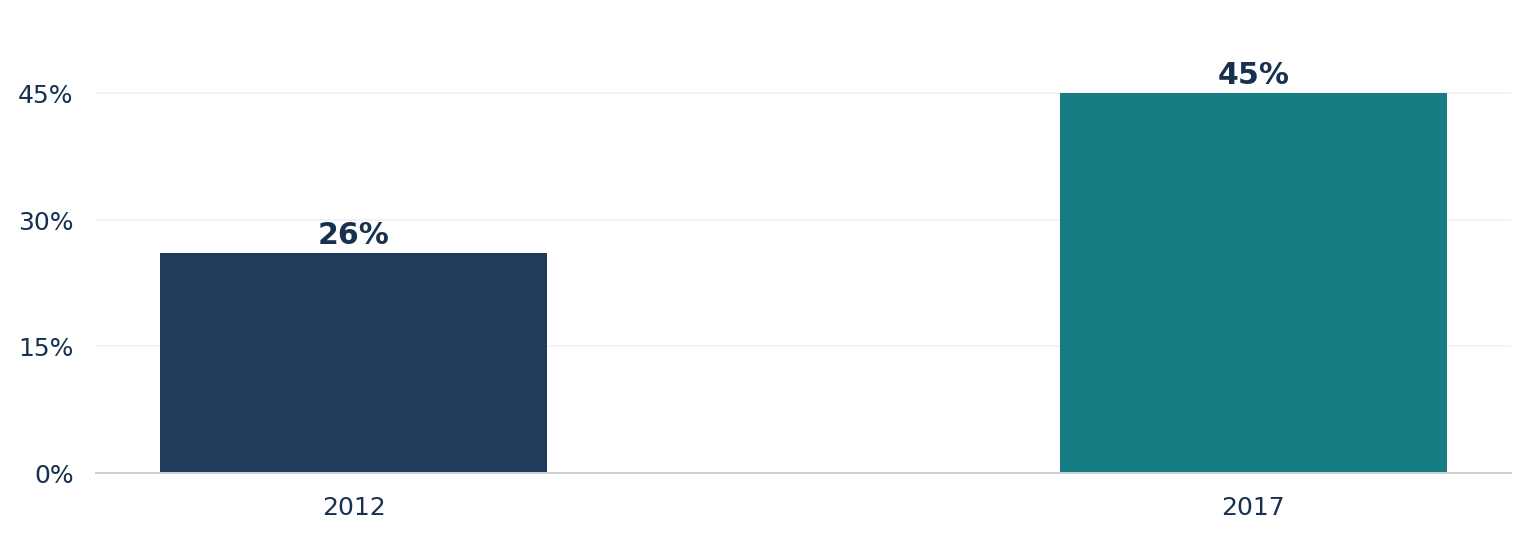
FIGURE 4 | Three-year completion for first-time-in-college students, 2012 vs. 2017: a descriptive institution-level trend. It does not isolate ARC effects. Source: Goldrick-Rab and Cady, 2018.
The 2023 Aspen Prize also cited graduates’ earnings approximately $11,000 higher than those of other new hires in the region. That comparison concerns graduate labor-market outcomes, not a quantified wage effect of receiving basic-needs services. Amarillo combined poverty-focused student support with substantial academic changes, including tutoring and redesigned course schedules.
Why other institutions are paying attention
Unlike a stand-alone pantry that may depend on donations and volunteers, Amarillo documented a strategy colleges can adapt: recognize poverty as a completion issue, organize a single support hub, educate employees, integrate academic reforms and invest in ongoing outreach. A national Trellis Strategies toolkit uses Amarillo as a case study, and the college publishes a Culture of Caring page with a strategy guide and implementation resources for other institutions. That is evidence of dissemination—not proof of identical results wherever the practices are copied.
The model is also adaptable to university CARE teams and student-affairs operations. Case managers can coordinate with academic advisors, financial aid, accessibility services and local agencies while preserving clear crisis escalation procedures and appropriate student privacy controls. PallyWallyU or another resource-navigation tool could be piloted as a discovery layer, but no study cited here tests such a tool at Amarillo; accuracy, privacy and completed referrals would need independent assessment.
A 120-day replication playbook
Days 1–30 | Identify the avoidable exits
Survey food, housing, transportation, child care, technology and financial shocks using established items. Interview students and frontline staff. Map support eligibility, waitlists, hours, referral breakdowns and the students who never make contact. Name an executive sponsor and a cross-functional owner for each barrier.
Days 31–60 | Build one coordinated access pathway
Select a clearly advertised campus entry point: a person, service desk, secure website or integrated combination. Standardize warm handoffs, time-to-contact expectations and urgent escalation. Establish current directories with community partners. Do not collect sensitive student data in multiple unconnected spreadsheets.
Days 61–90 | Test proactive engagement
Invite students using respectful, plain-language messages timed to known academic pressure points. Make participation voluntary and avoid eligibility promises. If feasible, randomly assign the timing or channel of extra outreach—not access to essential services—to measure incremental lift in awareness and utilization.
Days 91–120 | Publish an honest scorecard
Track distinct students reached, completed referrals, days to help, benefits actually received, unmet demand, and student-rated ease of access. Link to credit completion and persistence only with proper consent, secure data governance and an evaluation design capable of supporting the claim. Disaggregate by relevant student groups without creating small-cell privacy risks.
The dashboard every college should build
| METRIC | PRACTICAL MEASURE | DECISION IT ENABLES |
| Reach | Unique students who engage / eligible student population | Is the program reaching beyond the students already connected? |
| Awareness | Students who can identify where to get each key service | Can students find help before an emergency? |
| Referral completion | Referrals that result in verified connection to a provider | Are handoffs working, rather than merely being issued? |
| Timeliness | Median hours/days from first request to useful support | Can a small crisis be solved before it becomes a stop-out? |
| Academic momentum | Course success, credits earned, persistence by support exposure | Are academic outcomes improving—and is the comparison defensible? |
Suggested implementation scorecard—not reported Amarillo outcomes. Define denominators and time windows before comparing campuses.
What the Amarillo case ultimately teaches
Amarillo’s achievement is not that it invented every service it offers. It made supporting students a college-wide responsibility and tested a concrete way to close the gap between available help and actual use. Its randomized evidence is particularly persuasive on the outreach question; its completion trend is encouraging but reflects a broad institutional transformation.
For U.S. colleges and universities, the most practical takeaway is a sequence: listen to students, organize help, proactively make it visible, verify that students receive it, and measure academic success without confusing association with causation. A campus does not have to duplicate Amarillo’s staffing or budget to begin; it does have to stop assuming that a list of resources is the same thing as an accessible system.
Sources and research notes
All numbered references below are publications reviewed and used in preparing this case study. Complete URLs are visible as well as clickable for editorial review and Divi transfer. Statistics and time frames reflect the cited historical studies; operational service offerings should be rechecked before publication.
The Hope Center (2021), Supporting the Whole Community College Student: The Impact of Nudging for Basic Needs Security (primary randomized-encouragement evaluation).
Full source: https://hope4college.com/files/wp-content/uploads/2021/10/arc_impactpaper.pdf
Goldrick-Rab, S., and Cady, C. (2018), Supporting Community College Completion with a Culture of Caring: A Case Study of Amarillo College (implementation and historical trend).
Full source: https://files.eric.ed.gov/fulltext/ED628055.pdf
The Aspen Institute (April 20, 2023), 2023 Aspen Prize Awarded to Amarillo College and Imperial Valley College (award, 8-point gain and graduate-wage comparison).
The Aspen Institute (May 18, 2021), Loving Students to Success (institution-wide support model, operations, historical gain).
Full source: https://highered.aspeninstitute.org/blog-posts/loving-students-to-success
Trellis Strategies (2023), Improving Student Success Through Basic Needs Centers, toolkit and Amarillo case study (replication framing).
Amarillo College, Advocacy & Resource Center (current official program listing).
Full source: https://amarillocollege.com/arc/
Amarillo College, No Excuses Poverty Initiative (institutional history and philosophy).
Full source: https://amarillocollege.com/arc/poverty-initiative
Amarillo College, Culture of Caring (faculty-facing resources and strategy guide links).
Full source: https://www.actx.edu/president/culture-of-caring
Amarillo College, Social Services (campus and community referral model).
Full source: https://www.actx.edu/arc/about-social-services
Amarillo College, Food Pantry program (current access description and multi-campus locations).
Full source: https://amarillocollege.com/arc/ac-pantry-is-for-ac-people-by-ac-people
Amarillo College, Adult Students Program (childcare, transportation, textbooks and related assistance).
Full source: https://amarillocollege.com/arc/about-asp
Aspen Institute (2023), Aspen Prize Exemplars: Student Success in College (short-term-course completion example).
Institute of Education Sciences, What Works Clearinghouse, Study 90425 (design and study context).
Full source: https://ies.ed.gov/ncee/wwc/Study/90425
Amarillo College, No Excuses Philosophy (institutional student-success measures and strategies).
Full source: https://www.actx.edu/ie/amarillo-colleges-no-excuses-philosophy
How to interpret the evidence
1. The 2018–19 randomized encouragement design tested additional personalized outreach, not the removal of basic-needs services. The comparison group could use the ARC throughout. [1][13]
2. The developmental-education comparison is a subgroup finding. The broader trial did not show statistically clear effects on GPA, credits earned or retention/graduation. [1]
3. The 2012–2017 first-time-in-college three-year completion rates and the Aspen Institute’s later four-year graduation-and-transfer improvement describe different measures and periods. Neither isolates the effect of the ARC. [2][3]
4. The 2017 student food, housing and homelessness measures may overlap, and estimates are based on survey respondents. Do not read them as additive or as a prevalence trend after 2017. [1]